
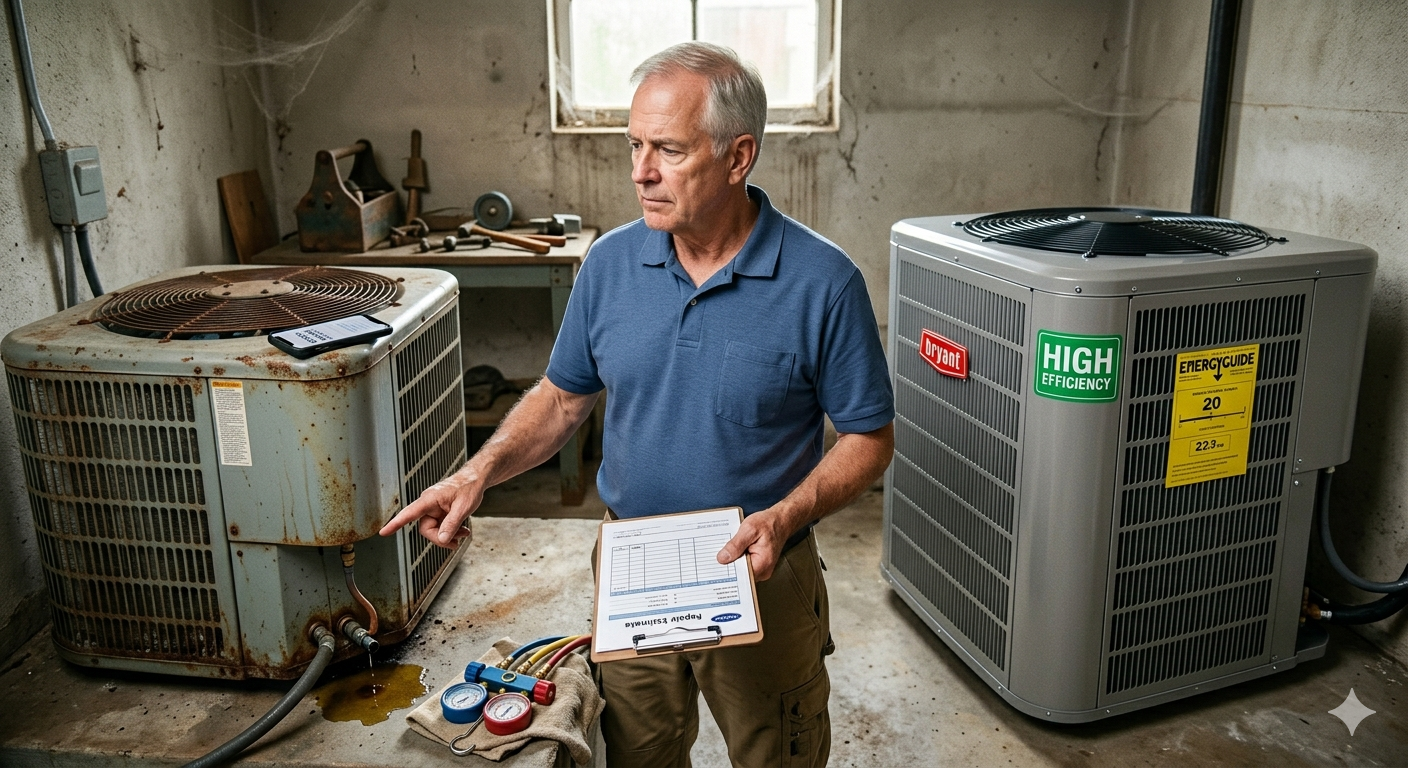
When your air conditioner starts malfunctioning, one of the biggest questions homeowners and business owners face is whether to repair the unit or replace it entirely. Understanding AC repair cost vs. AC replacement cost can help you make a smart financial decision that balances short-term expenses with long-term savings.
In this comprehensive guide, we’ll break down the real costs, key factors, and expert tips to help you decide which option saves you more money.
Understanding AC Repair Cost
The average AC repair cost can vary depending on the issue, the type of unit, and your location. Minor repairs may cost as little as $100, while major component failures can exceed $1,500.
Common AC Repair Costs
Here’s a general breakdown:
- Thermostat replacement: $100 – $300
- Capacitor replacement: $150 – $400
- Refrigerant recharge: $200 – $600
- Fan motor repair: $300 – $700
- Compressor repair: $800 – $2,000
If your system only needs a minor fix, repairing your AC is usually the most cost-effective option.
Understanding AC Replacement Cost
Replacing your air conditioner is a bigger investment but may offer long-term savings.
Average AC Replacement Cost
- Central AC system: $3,500 – $7,500
- High-efficiency systems: $6,000 – $12,000
- Ductless mini-split systems: $2,000 – $8,000
These costs include equipment, labor, and installation. While the upfront cost is higher, newer systems are more energy-efficient and require fewer repairs.
Key Factors That Influence Your Decision
1. Age of Your AC Unit
- 0–5 years old: Repair is usually the best option
- 6–10 years old: Depends on repair cost
- 10–15+ years old: Replacement is often more economical
Older units tend to break down more frequently and are less energy-efficient.
2. Frequency of Repairs
If you’re calling a technician multiple times a year, those repair costs add up quickly. Frequent breakdowns are a strong sign that replacement may save you more money in the long run.
3. Energy Efficiency
New AC units use significantly less energy. If your current system is outdated, upgrading can reduce your monthly utility bills by 20–40%.
4. Type of Repair Needed
Some repairs are inexpensive, while others are costly enough to justify replacement.
Repair if:
- Minor electrical issues
- Thermostat problems
- Small leaks
Replace if:
- Compressor failure
- Major refrigerant leaks
- Multiple component failures
5. The 50% Rule
A common guideline in HVAC is the 50% rule:
If the repair cost is more than 50% of the cost of a new system, replacement is the better option.
Long-Term Cost Comparison
Repair Scenario
- Initial repair: $800
- Additional repairs over 3 years: $1,500
- Increased energy bills: $1,200
Total: $3,500+
Replacement Scenario
- New system installation: $5,500
- Lower energy bills: -$1,500 over 3 years
- Minimal repair costs
Effective cost: ~$4,000
Conclusion
While repair may seem cheaper upfront, replacement can offer better value over time.
When AC Repair Makes More Sense
Repair is the better choice when:
- The unit is relatively new
- The issue is minor and inexpensive
- Energy efficiency is still acceptable
- Repair costs are low
In these cases, you can extend the life of your system without a major investment.
When AC Replacement Is the Better Investment
Replacement is ideal when:
- Your unit is over 10–15 years old
- Repairs are frequent and expensive
- Energy bills are increasing
- Your system uses outdated refrigerant (like R-22)
- Comfort levels are inconsistent
A new system improves cooling performance, reduces energy costs, and increases property value.
Hidden Costs to Consider
1. Energy Bills
Older systems consume more electricity, increasing monthly expenses.
2. Emergency Repairs
Unexpected breakdowns can lead to higher emergency service costs.
3. Comfort Issues
Poor cooling, uneven temperatures, and humidity problems can impact your comfort and productivity.
Tips to Save Money on AC Costs
1. Schedule Regular Maintenance
Routine maintenance reduces the risk of costly repairs and extends system life.
2. Get Multiple Quotes
Always compare estimates from different HVAC professionals.
3. Consider Energy Rebates
Many regions offer rebates for energy-efficient AC installations.
4. Upgrade Strategically
If your system is nearing the end of its lifespan, plan a replacement before it fails completely.
Repair vs. Replacement: Quick Comparison Table
| Factor | Repair | Replacement |
| Upfront Cost | Low | High |
| Long-Term Savings | Lower | Higher |
| Energy Efficiency | Moderate | High |
| Reliability | Decreases over time | High |
| Maintenance Needs | Frequent | Minimal |
Expert Recommendation
If your air conditioner is older, inefficient, and frequently breaking down, replacing it is usually the smarter financial decision. However, if the issue is minor and your system is relatively new, repair remains the best option.
Final Thoughts
Choosing between AC repair vs. replacement cost depends on several factors, including the age of your unit, repair frequency, and overall efficiency. While repairs may save money in the short term, replacing your system can provide better comfort, lower energy bills, and long-term savings.
Before making a decision, consult with a professional HVAC technician to evaluate your system and provide an accurate cost estimate.
FAQs
How much should I spend on AC repair?
If the repair cost is less than 50% of a new system, it’s usually worth repairing.
How long does an AC unit last?
Most air conditioners last 10–15 years with proper maintenance.
Is it cheaper to repair or replace an AC?
Repair is cheaper upfront, but replacement can save more money over time.
Does a new AC unit reduce energy bills?
Yes, modern systems are much more energy-efficient and can significantly lower utility costs.